

15 Fragen an Brooke Thompson

BrookeWer sich ein wenig in der Welt der Alternate Reality Games umschaut wird ihren Namen bereits gelesen oder zumindest gehört haben.

Bekannter ist sie jedoch unter dem Namen imbri, unter dem sie auch in den Unforums zu finden ist. Ohne vorab zu viel von ihren Antworten vorweg zu nehmen, stellen wir ihr diese Woche die 15 Fragen…


1) About when and how did you get in touch with ARGs?

Back in the spring of 2001, I was pointed to the Cloudmakers Yahoo! Group while working on a study of online communities. It immediately fascinated me, not because of the game behind it, but because of the way in which people from all over the world were coming together to work through a complex series of problems. The ARG was intriguing, but I had deadlines to meet for my research and graduation. After those were met, I found myself with a bit of free time and headed back to Cloudmakers community to see if I could make a bit more sense of what all was going on. It must have been fate that shortly after that a message was posted suggesting that the players form a group to create their own game. I joined the group not because I wanted to participate in the creation process but because I wanted to observe it. I figured that it would offer some great research potential – how do online communities differ when they’re solving a fictional mystery and when they’re creating that mystery. Though, things never work out as planned and within a few weeks I found myself as one of the core developers. Once the game went live, I was hooked and my career path was forever changed.

2) Did you take part in some ARGs as a player, too? Which?

This is a hard question to answer. I’ve observed a number of games and participated in a few of them. However, I would say that only Last Call Poker has taken me completely away from the observer role and made me an active player. Part of it was that I had more time to get involved, but most of it was the story combined with the live events and special favors. I really became immersed in that game.

3) In which ARGs have you been Puppetmaster/BHTS and what was your job in those?

I’ve worked on a number of games, though most were for private clients as corporate training exercises. Publicly, I’ve worked on Lockjaw and Metacortechs as a designer & writer and on Who Is Benjamin Stove as a writer.

4) Which ARG do you like best and why?

That’s like asking someone who their favorite child is. They each have their own personality, strengths, and weaknesses. Though, Last Call Poker did capture my attention unlike any other. Though it didn’t achieve the player base that I thought it deserved (millions and millions!), it was a very well designed game that took into account so many different player types – those that enjoy the social aspects were given as much thought and consideration as those that enjoy the puzzle or story aspects. Additionally, it was designed in a way so that you could get satisfaction from the experience if you had ten minutes to devote to it or forty hours.

5) Which was the funniest/nicest happening while doing/playing an ARG?

So many things come to mind, every game has moments to remember. The things that I tend to remember most are things that we, as designers, had little to do with. The spontaneous parties in the player chatroom for Lockjaw, the photoshopping of characters in Metacortechs and Who Is Benjamin Stove. Seeing the players so actively engaged with something that you had a hand in creating to the point where they are creating their own content and fun is my favorite part of any game.

6) Are there any memories to happenings that you wanted to forget about?

I don’t like to forget things, even the bad ones, as there is always something to be learned from it. And, with every bad, there is some good to be gained. For example, in Metacortechs (a game in the Matrix universe that was a bit attractive to hackers) our server was compromised through a relatively simple exploit that we had overlooked. Fortunately, they didn’t really know what they were doing and we were able to patch it quickly – no harm came to the game and there was never a risk to any confidential information (such as email addresses). However, in doing so, they learned that we were the team behind it. Until that point, most of the players were still debating on whether it was an official game for the series or whether it was fan-fiction. So, while we were all quite upset at first that the mystery of who was behind it was solved, solving it let the players move beyond that debate and become more fully engaged with the story.

7) How do you explain ARGs to your family / friends / relatives and how do they react?

I usually start of by explaining that it’s a new twist on storytelling. Unlike television or radio or even the horror story told over a campfire, in Alternate Reality Games, the story has been broken up into lots of little pieces and scattered around. They pieces might be video clips or text or audio files. They might even just be an object. They may show up online, on your voice mail, or even at that really cool statue in town. So, together with all sorts of people, you go out and gather all of these pieces and put together the story. And, the coolest thing about it all is that while you’re putting the story together, you actually have influence on it. So, you might be able to chat with a character or affect whether a character lives or dies.

8) Which 3 things does an ARG really need to have, to be a good ARG in your opinion?

The first and most important thing that an ARG needs is a story. Without a story, the ARG cannot exist. The next thing that an ARG needs is good communication between the players and the developers. The third must have is a solid game design that helps to keep players engaged with the story while facilitating the communication between the players and developers.

9) Do you have a favourite character from an ARG?

Wow, so many good characters to choose from. I think that my favorite was Brutus who was, actually, a house AI in the Beast. He had such a great sense of humor and compassion. You know, for a house and all.

10) What are you currently working on? (if you may tell us/are allowed to tell us 😉 )

Oh, I wish I could tell you all about all the exciting things going on right now. I will say that, if everything goes as planned, it’s going to be a very busy and very fun 2007.

11) Which puzzle from past ARGs do you like best/was real fun? Can you tell us why?

My favorite puzzles are those that truly offer a lot to the story, both in their design and in what they reveal. I also like complex puzzles and those that bring the community together, yet could be solved on your own. And, while I create dozens of smaller puzzles, puzzles that do all of that are my goal. And, of those puzzles, the Seven Sins puzzle in Lockjaw was my favorite.

Lockjaw dealt with the questions of immortality and ethics (business, medical, human). We had developed a web browser for the game that, presumably, all of the characters and a number of the players used. The browser had a built in AI named Mephista. She saw every page that everyone who used the browser saw and, within the story, she dumped certain information into a central server. So, clearly, someone or something was aware of nearly everything that was going on (although players weren’t fully aware of this until the end game). Additionally, we had several characters out for revenge and looking at all of the sins, no matter how simple and mundane they might be, that the other characters were committing.

In order to show that in the game and to add to the depth of all of the characters, I created a puzzle deeply rooted in the mythology and symbolism of the Seven Deadly Sins. Each sin is associated with a color, an animal, and a punishment in hell. Additionally, each sin is paired with a corresponding virtue. For example, envy is associated with green and represented by a dog. If you’re guilty of envy, you will be punished in hell by being placed in freezing water. The contrary virtue of envy would be charity – combating the jealousy of others by giving to them. I used the great painting The Seven Deadly Sins and The Four Last Things by Hieronymus Bosch not only because it’s a cool painting but to help clue players in to the idea that the theme of the puzzle was the sins.

So, the puzzle…

It started off rather simply. Players would be taken to a page with a colored background, an image, and a submit box. Every time you returned to the page, the color of the background the image would change. Every time that you made an incorrect guess in the submit box, it would kick you out to various pages online. At first, it seemed very random. But it wasn’t long before players identified the images as being a part of the painting. That gave them the seven sins reference. But they still weren’t sure what to put into the submit boxes. The kickouts offered the clues.

Each of the four images was themed and was paired up with a long list of kickouts. For example, an incorrect guess on the image showing the view of hell led to websites that dealt with punishment as well. Incorrect guesses on the other images led to pictures of animals, punishments, or sins. Once players figured out the symbolism behind the sins, it was a simple matter of pairing up the color (telling them which sin they were looking at ie green background meant they were dealing with envy) with the image and they knew what they had to enter – the name of the sin, the corresponding virtue, punishment, or animal. There were 28 correct answers in total. Each correct answer would send players to page with an image, poem, short story, or statement that fit the sin and which they could later pair up with characters in the game.

It didn’t stop there. The file names for each correct page seemed random at first with names such as 1heaesnu1.htm. It was what’s known in some cipher crowds as a columnar transposition, but that’s just a big fancy term for “line them up and read up & down”. When they were put in order (marked by the numbers on the beginning and end), a phrase which explained the character’s point for the puzzle appeared: Higher than the question of our duration, is the question of our deserving. Immortality will come to such as are fit for it, and he who would be a great soul in future, must be a great soul now. Ralph Waldo Emerson, “Worship” The Conduct of Life.

In my mind, it really satisfied everything that I want to achieve in creating a puzzle. It could be solved individually – there was nothing extraordinarily difficult about it and all of the information needed could easily be found on Google. Yet, it was easier to solve as a group. Refreshing the page to get the right combination of color and image could be a bit tedious and so everyone could pitch in. It also had that awe factor – initially looking at it and seeing it change and thinking you could never make sense of it, yet it was relatively easy to do. It had the excitement factor with each little solution taking you a step closer and providing a bit of satisfaction. And, the motivation for the puzzle, they content of the puzzle, and the information that it provided all fit into the story. But it also led to more questions – who was doing this? why? how?

12) Do you have something like a „phrase“/“objective“ which you follow while organizing and running an ARG?

I don’t have a specific statement, but every game has the same ultimate goal… putting the players first. Without the players, there would be nothing. Sure, the client gives me my pay check and that’s nice. I really do appreciate it. But, they give me the paycheck not just to create a game but to engage the audience. And, in games without a client, the money will only come if the players do. You have to put them first and I think more developers and games would benefit from remembering that.

13) Do you remember a situation, in which you wanted to give up anything? What happened?

I really can’t. Sure, we all have those days when nothing seems to go right, but then something happens that reminds you that you have the best job in the world.

14) Was there something like a favourite item from an ARG that you didn’t want to give away, but you had to, because the IG-Character had to?

I can’t think of an item, but I can think of a character… Moot

Moot was a Lockjaw character that the players just adored. We all did. We didn’t mean for that to happen, he was a last minute addition as a very minor character. All we knew is that two people in his little group of characters would have to die. When the players loved him as much as they did, we had to kill him. It made the scene of their deaths that much more impactful. I hated seeing him go. From a writer perspective, he was a gem. He only spoke in punctuation.

Lockjaw seems to be a theme in this interview. I imagine that’s because the five year anniversary is coming up. I cannot believe that it’s been so long.

15) How do you see the future of ARGs?

I have no idea. There are so many directions that you can go in with ARGs and I cannot wait to see where people head. Over the next year or so, we’ll see more people experimenting with various financial and delivery models – things such as the cards in Perplex City, the t-shirts in Edoc Laundry are just the start. We’ll probably also see more people looking at serial ARGs similar to Studio Cyphers. And, with Jane McGonigal’s influence, we’ll see more games taking advantage of play in real world spaces. We’ll also see a booming interest in ARGs in the „serious games“ space and moving from corporate training games to education and even activism. But looking 5 or ten years out, it’s difficult to know.

Vielen Dank, Brooke, daß du dir die Zeit für unsere 15 Fragen genommen hast (PM).

Ny Takma

Ny TakmaAtlantis, das sagenumwobene und doch bislang nicht gefundene Land um das sich ebenso waghalsige wie auch abenteuerliche Geschichten ranken, ist in den Fokus der Unfiction Spieler geraten.

Am 30. September erhielten sie eine Email, durch welche die Spieler auf eine Webseite gelangten. Diese warnte davor, daß das Ende bevorstehe und enthielt Videos, die einen explodierenden Planeten zeigten. Schnell machte der Inhalt der Seite klar, daß man sich auf die Suche nach Hank Morgan begeben mußte, einen Mann, der von der geheimnisvollen Sprache von Atlantis in seinen Bann gezogen war und deshalb auch im Bermuda Dreieck nach Antworten suchte.

Durch einige Nachforschungen erfuhren die Spieler von Hanks trauriger Vergangenheit. Seine Faszination und gleichzeitig auch Besessenheit führte dazu, daß sich seine geliebte Tochter von ihm ab wand und seine Frau Selbstmord beging.

Durch Hank erlangten die Spieler auch Kontakt zu dessen gutem Freund John und ebenso zu Bryan Aristos, einem Linguisten. Zudem erfuhren sie von der zentralen Aufgabe des Spiels. Es galt die Atlantische Sprache zu übersetzen, wobei sich während dieses Prozesses immer deutlicher herauskristallisierte, daß Bryan nicht zu den vertrauenswürdigsten Personen zählte. Neben kryptischen Texten und rätselhaften Symbolen stießen die Spieler auch auf Atlantische Spuren zu Kendra.

Die Spieler organisierten sich dabei mittels eines Wikis und programmierten sogar ein Übersetzungsprogramm, durch daß sie die kryptischen Lanti-Texte einfacher übersetzen konnten. In den Unforums kann man das Voranschreiten der Spieler nachlesen.

Das ARG fand letzte Woche sein Finale, bei dem sich noch einmal herausstellte, daß alles ein wenig anders war. In einem Video-Upate kann man sich über die letztendlichen Zusammenhänge genauer informieren. Die „Men Behind The Curtain“ standen außerdem am 25. November für Fragen und Antworten im Puppetmaster Chat bereit. Sobald der Mittschnitt veröffentlicht wurde, werden wir an dieser Stelle auf ihn verlinken.

15 Fragen an Brian Clark

Rumors say: This isn't Brian Clark

Den Auftakt unserer neuen Interview-Serie macht Brian Clark.

Er ist Gründer und CEO der GMD Studios im sonnigen Orlando, Florida und beschäftigt sich seit 1994 mit seltsamen Experimenten – wovon man sich auch auf der Seite der GMD Studios überzeugen kann.

In den späten 60er geboren, taucht er immer mal wieder als FLMutant in den Foren und anderswo auf, genauso wie heute…

… denn heute stellt er sich den 15 Fragen der ARGReporter:

1) About when and how did you get in touch with ARGs?

I’ve been practicing interactive narrative for quite awhile, so I aware of ARGs. I didn’t really become intensely interested in the community until they started showing up in a narrative about puzzle solvers we were doing for Sharp (“The Legend of the Sacred Urns”) and calling us “puppetmasters”. So in a way, since we had never had such obvert gameplay in our narratives, we’d never been branded as ARG developers before, but the similarities in perspective were incredible.

2) Did you take part in some ARGs as a player, too? Which?

You could say I was a casual lurker of Bees. Long before that, my staff and I got mildly addicted to an early interactive piece called “The Rift” that Vivid Studios produced for Silicon Graphics in the mid 1990s and ended up being the poster children for “those crazy Internet people” after we started building bots to watch for puzzle updates.

3) In which ARGs have you been Puppetmaster/BHTS and what was your job in those?

I was one of the concept developers and creative leads for “The Legend of the Sacred Urns” for Sharp, “The Art of the Heist” for Audi and “Who Is Benjamin Stove?” for General Motors. I was also part of a collaboration last year called “The Voice” that was decidedly ARG-like but turns that metaphor on its head.

4) Which ARG do you like best and why?

I’m not big on picking bests. I don’t think “the perfect ARG” has been made yet, my own work included. So, honestly, when I think about the canon of work in the space title by title, the first thing that comes to mind about each one is some fascinating aspect of the work – Bees for loose collaboration, Regenesis for cross-media integration, Perplex City for productizing, Heist for real-world immersion, etc.

5) Which was the funniest/nicest happening while doing/playing an ARG?

Lou will always be infamous for hiding in a porta-potty (will German’s even know what that is?) from Nisha during a Heist live event.

6) Are there any memories to happenings that you wanted to forget about?

Must … forget … evil … cube … from … Heist.

7) How do you explain ARGs to your family / friends / relatives and how do they react?

I tend to keep it pretty brief in order to avoid confusion, something like, “they are interactive stories that the audience participates in together that unfold in real time”. In general, most of my family and friends already think of me as a “mad scientist” so the reactions aren’t that different than normal.

8) Which 3 things does an ARG really need to have, to be a good ARG in your opinion?

It all really starts with a deep immersive narrative. Assuming you can muster that, then to be a really great ARG it needs to be a narrative that the audience influences and leaves their fingerprints all over … and needs to accomplish that by giving the audience something to do together. Flexible storytelling with meaningful activity.

9) Do you have a favourite character from an ARG?

My answer is pretty obscure! In “Who Is Benjamin Stove”, the main character (Tucker Darby) has to deal with, among other things, his technologically-impared but socially-precocious mother. “Tucker’s Mom” was a recurring character in the community boards penned by Brooke Thompson with deliciously ironic … and then later heartbreakingly sincere … complexity.

10) What are you currently working on? (if you may tell us/are allowed to tell us 😉
)

Mad scientists tend to be a little tight lipped! We have a couple of projects in the pipeline that roll out this winter that I can talk about abstractly. The first is really an experiment in changing the way sponsors work with large corporate games in the U.S. by creating a persistent ARG platform that has regularly occurring episodes: rather than the ARG ending after a few months, instead there is always another episode just around the corner. The second involves a new approach to structuring ARGs that we’ve been playing around with that adopts some of the principles of object oriented storytelling with all that entails: objects and locations driving the storytelling framework, one where you grow to understand the owner of the objects and the locations they personalize. The two are quite different in texture and goals, but share the desire to stretch the fabric of traditional ARGs.

11) Which puzzle from past ARGs do you like best/was real fun? Can you tell us why?

Surprisingly, I’m not a huge puzzle geek. What I tend to remember are the meta-narratives of the audience’s experience solving those puzzles.

12) Do you have something like a „phrase“/“objective“ which you follow while organizing and running an ARG?

We have a few mantras we’ve developed over the years. One of them is “how do we create more player agency?” Narratives on tight linear rails are rarely satisfying in immersive stories – the audience should rightly feel the narrative wouldn’t have unfolded at all without them. Another is “it’s working when the audience is entertaining themselves”.

13) Do you remember a situation, in which you wanted to give up anything? What happened?

That’s never more than a passing thought, really. Most of the time, when an ARG is live, the entire structure has a certainly among of looseness, constantly be re-written and explored and brainstormed, often in reaction to audience speculation. So in one way, you give up little things and change little details constantly … and remind yourself not to give up the big things.

14) Was there something like a favourite item from an ARG that you didn’t want to give away, but you had to, because the IG-Character had to?

Wer ist Benjamin Stove ?We bickered and squabbled as a team during Stove about the actual crop circle painting. It became a joke internally about rewriting the story so that it didn’t go out. But it had to for the story to be complete as a journey.

15) How do you see the future of ARGs?

I think it is potentially a label in flux. It describes one set of ascribed rules for immersive entertainment, but at the same time is one of the principal conceptual breeding grounds for some unique concepts inside that bigger playground. Part of that concept is “collective intelligence” which is a collaborative model. Another part is “flexible narrative” which is a storytelling model. Another part is “platformless gaming” which is a counter-culture appropriationist movement. There will be continue to be a huge variety of experiments in immersive entertainment, and some of those experiments might stretch the strict definitions of ARG to the bending or breaking point while still ringing true to the DNA which emerged in this space.

Vielen Dank, Brian, daß du dir die Zeit für unser Interview genommen hast und damit unseren Lesern einen kleinen Einblick hinter die Kulissen gewährst. (PM)

ARGNetCast

ARGNetUnsere Freunde von ARGN haben auf Ihrer Seite einige Neuerungen unter- und angebracht. Das Design wurde leicht verändert und ist durch das obere, erweiterte Menü noch einfacher für ARG-Neulinge geworden. Außerdem wird ab sofort der Schriftzug ARGR durch ARGNet ersetzt werden, um den Namen der Seite stärker in den Vordergrund zu heben.

Neben diesen Design-Änderungen gibt es jedoch noch eine weitere Neuerung: den ARGNetCast.

Startschuß für den 1. ARGNetCast war der 23. Oktober 2006. Brooke, Sean und Jonathan hatten sich für die erste Folge bereits ein ganzes Sortiment an Themen zurechtgelegt, über das sie gesprochen haben:

Den Netcast könnt ihr Euch hier anhören: ARGNetCast Episode 1

In der zweiten Folge vom 29. Oktober wurden einige Themen der 1. Episode noch einmal vertieft sowie ein Rätsel der Woche vorgestellt und weitere ARGs und Themen aus diesem Bereich besprochen.

Den Netcast könnt ihr euch hier anhören: ARGNetCast Episode 2

Der Erscheinungstermin für die ARGNetCasts ist jeweils wöchentlich, wobei wir natürlich schon sehr gespannt auf den dritten Teil sind.

The Prague Files

The Prague Files (Wallpaper 3)Jack ist 26 Jahre alt und bekannt dafür ein rasantes Leben zu führen. Eine seiner größten Sorgen ist es anderen zu Nahe zu kommen, denn das wirft nur unnötige Fragen auf.

Außerdem gibt es da noch die Gerüchte. Gerüchte über das, was sein Vater angeblich getan hat. Im Alter von 6 Jahren erfuhr er, daß sein Vater nie wieder nach Hause zurückkehren würde. Die Gerüchte verdichteten sich, daß sein Vater einen furchtbaren Fehler begangen habe und so das Leben einiger Männer auf dem Gewissen habe.

Als dann eines Tages ein Fremder an ihn herantritt, wirft dieser ein Rätsel auf. Der Mann erkennt in Jack die Züge seines Vaters und verrät ihm, daß sein Vater nicht an jenem tragischen Fehler verantwortlich war, denn er sei dabei gewesen.

Es täte ihm schrecklich Leid, daß er nicht früher an ihn herangetreten wäre, aber er müßte ihm eine Frage stellen bevor er weiterspricht: „Are you still your father’s son?“

The Prague Files (Wallpaper 1)Nach diesem Gespräch gerät er ins Grübeln und sein Leben ist nicht mehr das Gleiche.

Einhergehend mit dieser Geschichte startet am 4. Dezember ein 14 tägiges Live Game in den Vereinigten Staaten, bei dem man Jack bei seiner Jagd nach der Vergangenheit und seiner Zukunft unterstützen kann. Die Teilnahme kostet einmalig 6,95 $, wobei wir noch nicht klären konnten, ob man auch von uns aus per Mobiltelefon daran teilnehmen kann oder auf die anderen Medien wie Email und Internet beschränkt ist.

Weitere Informationen gibt es auf der Seite des Live Games Network oder im Chip-Blog XBOX-Watch.

Das letzte Ritual (des Phoenix)

Das letzte RitualDer Profiler Gerd Hanke verfolgt nun schon seit mehr als vier Jahren gemeinsam mit dem Enthüllungsjournalisten Jack Lorski einen satanischen Serienmörder, den Phoenix. Der einzige, der ihn bisher zu Gesicht bekommen hat und sich wieder aus seiner Gewalt befreien konnte, ist Lorski. Zumindest beim letzten Mal.

Dann wird jedoch im Juli diesen Jahres in einem schottischen Krankenhaus seine Leiche gefunden und die Nachricht seines Todes versetzt seine Famile, Freunde und Bekannte in einen tiefen Schock.

Am 26.Oktober 2006 ist nun ein mysteriöses Video aufgetaucht. Ob es bewußt an dem Fundort (einem Papierkorb) hinterlegt wurde oder Zufall war ist noch ungewiß.

Im Blog von Olle Olte, der das Video gefunden hat, wird auch schon wild spekuliert, was es damit auf sich hat. Der Und3rtaker (Ken) konnte aus den im Video enthaltenen Hinweisen bereits die Verbindung zu der Webseite Das letzte Ritual herstellen.

Das letzte RitualDort erfährt man, daß den Ermittlern eine DVD des Täters in die Hände gefallen ist, durch die man sich neue Hinweise verspricht. Um die Suche nach dem Phoenix so schnell und gut wie möglich voranzutreiben, wird die DVD der Öffentlichkeit zugänglich gemacht.

Es gibt auch bereits zwei Spuren, die allerdings völlig unabhängig voneinander zu sein scheinen. Die eine führt nach Spanien während die andere in die vereinigten Staaten weist.

Wie hängen diese beiden Spuren zusammen? Wohin wird die Suche noch führen? Und wird es gelingen, den Serientäter dingfest zu machen, bevor es noch weitere Opfer geben wird?

Was ist Perplex City?

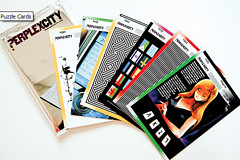
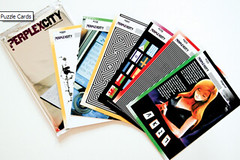
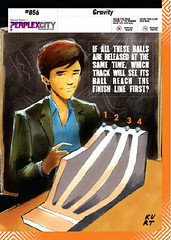
Perplex City KartenPerplex City interessiert mich jetzt schon eine ganze Weile, da es eine Kreuzung aus Rätselpfad, ARG und Schatzsuche zu sein scheint (zumindest nach dem, was ich bisher darüber gelesen habe). Da ich alle diese Bereiche gleichermaßen mag, habe ich mir aus Neugierde einige Karten bestellt. Mittlerweile sind diese bei mir eingetroffen und, was soll ich sagen, ich glaube jetzt hat es mich auch erwischt.

In der aktuellen Season 1 gibt es insgesamt 256 Karten, die in 4 Waves ausgegeben wurden:

Wave 1 (ab 7/2005): 66 Karten
Wave 2 (ab 11/2005): 66 Karten
Wave 3 (ab 4/2006): 62 Karten
Wave 4 (ab 7/2006): 62 Karten

Jede Karte hat eine farbliche Umrandung, die ihre Häufigkeit und den Schwierigkeitsgrad des aufgedruckten Rätsels angibt: rot (sehr häufig/sehr leicht), orange, gelb, grün, blau, lila, schwarz und silber (sehr selten/sehr schwer)

Von jeder Farbe gibt es 32 Karten, die jeweils in 8 Sets zu 4 Karten unterteilt sind. Diese Sets haben folgende Namen: Ivy, Flames, Hex, Circles, Star, Maze, Pixel, Water

Die 1. Auflage bestand aus Karten der „Wave 1“ und „Wave 2“ mit dem Aufdruck „Limited Edition Pre release wave 0.5“. Alle nachfolgenden Auflagen (auch die Nachdrucke von Wave 1 und Wave 2) erkennt man an der aufgedruckten Wave-Nummer (z.B. „Wave 1 Season 1“).

Perplex City RätselkarteDaneben gibt es auch noch Sonderkarten: 1) Karte #257 (Farbe: gold / weltweite Auflage: 333 Stück / mit viel Glück zu finden in „Wave 4 mixed booster packs“) 2) Promotional Cards

Löst man das Rätsel einer Karte, kann man die richtige Antwort unter Angabe der freigerubbelten 12-stelligen Karten-ID-Nummer im Internet eingeben und erhält dafür in seinem Account die auf der Karte angegebenen Punkte gutgeschrieben (je nach Karte zwischen 1 und 64 Punkten). Hat man alle 4 Karten eines Sets gelöst, erhält man automatisch noch Bonuspunkte (je nach Set zwischen 4 und 256 Punkten). Die Anzahl der gesammelten Punkte bestimmt den aktuellen Rang auf dem Perplex City Leaderboard.

In der Regel enthält eine Karte jedoch mehr Informationen als nur das „normale“ Rätsel. Die Rückseiten der Karten mit den Farben gelb bis silber ergeben zum Beispiel den Stadtplan von Perplex City, auf 52 der Karten befinden sich Teile von Buchstaben die zusammengelegt einen Text ergeben und man findet teilweise auch Spielkartenwerte ( z.B. Herz Dame) aufgedruckt. Ferner kann man durch die Hinweise auf den Karten mehr über Perplex City und die Charaktere und damit vielleicht auch über den Aufenthaltsort des Cubes erfahren.

Neben der Sammelleidenschaft (man hätte natürlich gerne alle Karten, das war ja früher bei den Sammelbildern auch schon so) und dem Vergnügen, Rätsel zu lösen (zum Teil muss man die Karte dafür auch Wärme oder UV-Licht aussetzten) gibt es da jedoch auch noch etwas anderes: Die Karten sind nur ein Teil einer Story (Webseiten, Blogs, Telefonanrufe, E-Mails, SMS-Nachrichten, Live Events…), in der es darum geht herauszufinden, wer den „Receda Cube“ wann und wie aus „Perplex City“ gestohlen und dann irgendwo auf der Erde versteckt hat. Da die Einwohner ihn dringend brauchen, haben sie einen Finderlohn in Höhe von 150.000,- EUR ausgesetzt. Dieses Preisgeld kann sich sehen lassen und ist für viele sicher auch ein Anreiz mitzuspielen.

Mein Fazit: Schade, dass ich erst jetzt eingestiegen bin, denn ich finde das Konzept klasse. Leider sind die Karten innerhalb Deutschlands auch nicht gerade leicht zu bekommen. Falls daher jemand einen deutschen Laden kennt, wo man „Wave 4 Booster (pure/mixed)“ ordern kann, würde ich mich über einen Hinweis in den Kommentaren sehr freuen. Dies gilt auch für den Fall, dass Angaben in dem Artikel nicht richtig bzw. ergänzungsbedürftig sind. Wie gesagt, ich bin ja gerade erst ein paar Tage dabei.

R U Sammeeeee?

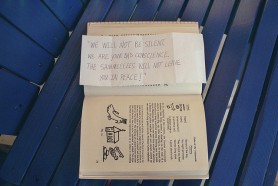
Book Of SymbolsAnfang diesen Monats bekam Sean Stacy, Autor auf ARGN und Gründer von unfiction, fünf kleine, hölzerne Schatullen, jeweils im Abstand von einem Tag per Post zugestellt. In jedem dieser kleinen Kästchen war eine Nachricht sowie das Blatt einer weißen Blüte enthalten.

Gemeinsam versuchte man das Geheimnis um diese kleinen Kästchen zu ergründen und entdeckte dabei eine Vielzahl an Blogs, Foren, Flickr-Bildern und sogar YouTube-Filmen, ohne bislang genau zu erfahren, was sich hinter dem Begriff Sammeeees nun eigentlich verbirgt.

Trotzdem hat sich bereits in nur einer Woche eine regelrechte Fangemeinschaft um dieses Mysterium versammelt, und es wird fleißig mit den Charakteren gemailt, gechattet und telefoniert.

Auf der einen Seite gibt es den unheimlichen Mr. Alan Johnson, der als Absender der Päckchen gilt. In seinen Nachrichten spielt er immer wieder auf die Sammeeees an, ohne jegliche Information darüber zu verlieren, was dieser Begriff eigentlich ausdrückt. Auf der anderen Seite gibt es unter anderem Addison, Betty, Higgs, Trinket und Happyhappyrogers. Letztere trägt aus Vorsicht vor Gedankendieben nun einen selbstgebastelten Alu-Hut und hat bereits an einer wichigen Mission teilgenommen, deren genaue Ziele ebenfalls noch im Nebel liegen.

Foren:
Sammeeees (UnForum [E])
R U Sammeeees? (ARGRForum [D])

Wikis:
Sammeeee’s (Wikidot [E])
R U Sammeeeees? (ARGRWiki [D])

CSI:NY ermittelt in der EDOC Laundry

EDOC Shirts geben den Ermittlern von CSI:NY Rätsel aufCSI:NY ist keine geheimnisvolle, verschlüsselte Botschaft sondern einfach die Abkürzung für eine beliebte Abendserie sowohl bei uns wie auch in ihrem Ursprungsland den USA. (Die Abkürzung steht für Crime Scene Investigation – New York)

In der morgen Abend in den USA ausgestrahlten Folge (Hung Out To Dry) dreht sich dieses Mal alles um griechische Mythologie, wobei auch ganz alltägliche Kleidung eine große Rolle spielen wird. Der Co-Creator und Executive Producer der Serie, Anthony E. Zuiker, war nämlich von der Idee die Spuren der Murder Mystery im Design der Kleidung unterzubringen so angetan, daß dies in der aktuellen Folge aufgenommen wurde.

Dazu wurden von der EDOC Laundry fünf ganz spezielle und limitierte Designs entworfen, die sich in der morgigen Folge der Serie wiederfinden. Gary Sinise und sein Team stehen somit vor der Herausforderung die Codes dieser Shirts zu enträtseln um dem Geheimnis auf die Spur zu kommen.

Die Designs sind so gestaltet, daß sie auf den ersten Blick wie ganz „normale“ Drucke aussehen. Wer rechnet schon damit, daß die Bluttropfen, die auf das Hemd gedruckt wurden, ein besonderes Geheimnis preisgeben können, wenn man sich ihres Rätsels annimmt. Doch die Bluttropfen sind nicht das einzige Rätsel.

Deus City – Countdown in die Zukunft

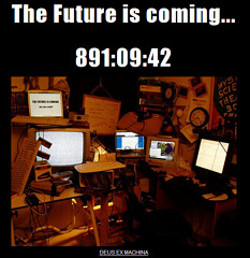
Deus City CountdownAuf der Deus City Webseite wird ein neuer Countdown angezeigt, der bis zum 11. November auf 00:00:00 herabzählen wird. Was dann dort geschehen wird, das darf sich bislang jeder in seinen eigenen Gedanken ausmalen.

Sicher ist jedoch, daß dann noch nicht das ARG mit dem gleichen Namen, Deus City, beginnen wird, denn der Start für jenes Alternate Reality Game ist für das Frühjahr 2007 angesetzt.

Warten wir also mit Spannung auf den 11. November um zu erfahren, was dann passieren wird. Wer nicht solange auf Rätsel verzichten möchte, der kann seine eigenen Rätsel entwerfen und an Adam Brackin, einen der Puppetmaster von Deus City, einsenden und vielleicht wird der Vorschlag dann in das ARG aufgenomen.

Das Deus City Blog ist ebenfalls ein guter Tipp um die Wartezeit zu verkürzen. Und bis dahin gibt es ja noch das eine oder andere bereits laufende Alternate Reality Game, bei dem man immer noch einsteigen kann.